


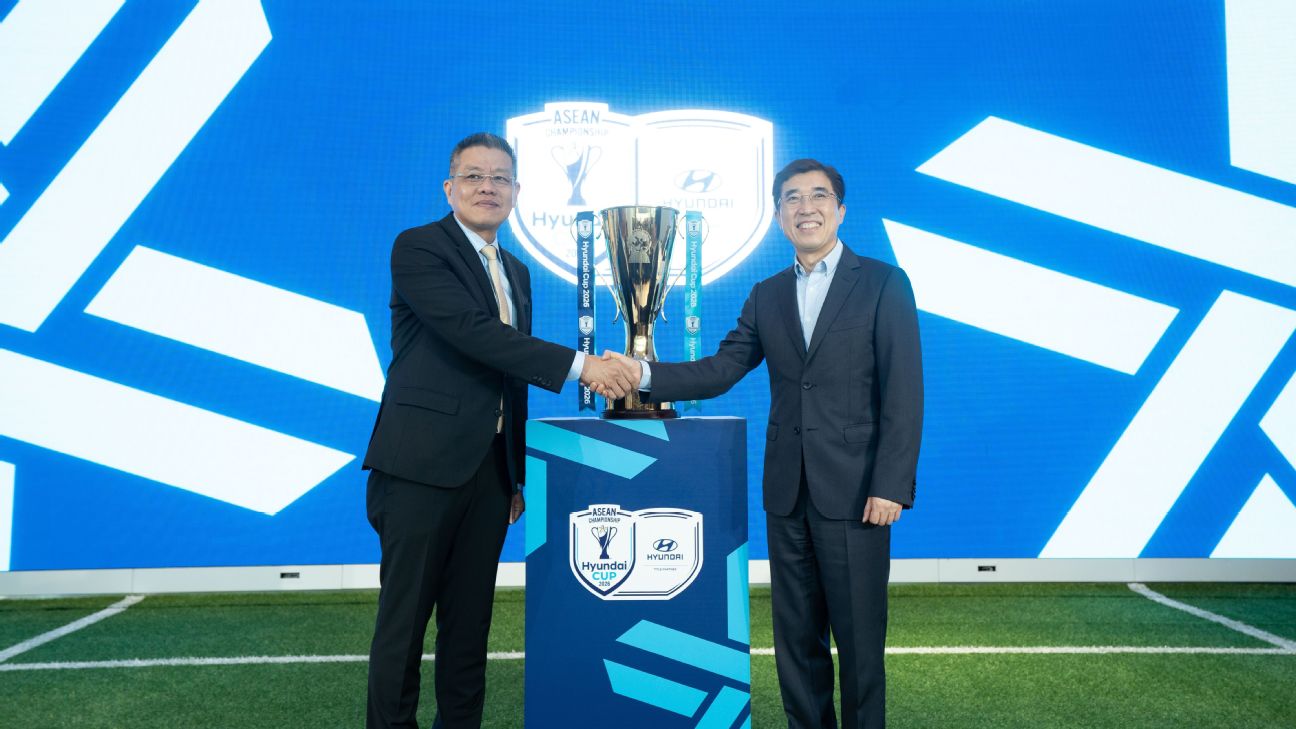
ASEAN Hyundai Cup 2026 draw ignites anticipation across Southeast Asia
The group stage draw for the ASEAN Hyundai Cup 2026 has been completed, officially launching the build-up to the 30th anniversary edition of Southeast Asia’s premier men’s football championship. The draw placed defending champions Vietnam, alongside regional heavyweights Thailand, Malaysia, the Philippines, and other ASEAN nations into competitive opening-round matchups that are expected to reignite historic rivalries and captivate fans across the region.
As one of Asia’s most-watched regional tournaments, the ASEAN Hyundai Cup holds significance beyond silverware. It serves as a benchmark for national team progress, coaching strategy, and player development across Southeast Asian football. With the groups now confirmed, attention shifts from speculation to preparation.
Why the ASEAN Hyundai Cup remains the region’s football heartbeat
Over three decades, the ASEAN Championship has evolved into the most influential football competition in Southeast Asia. It has provided a consistent competitive platform for national teams that often face limited exposure to high-intensity international tournaments outside Asia’s major confederation events.
The tournament has played a critical role in shaping football identities across the region. For nations such as Thailand and Vietnam, it has become a proving ground for tactical evolution and squad depth. For emerging teams like the Philippines and Cambodia, the competition offers visibility, experience, and momentum-building opportunities.
The 2026 edition carries added symbolic weight as the 30th anniversary tournament, reinforcing its status as a cornerstone of ASEAN sporting culture. With fan bases growing rapidly and domestic leagues improving in quality, expectations for competitiveness have never been higher.
Group-stage dynamics and early competitive signals
The group draw immediately highlighted several compelling narratives. Vietnam, entering as defending champions, face heightened scrutiny as they seek to retain their title amid rising competition. Their placement alongside ambitious challengers ensures no margin for complacency in the opening phase.
Thailand, historically the tournament’s most successful side, enters with renewed motivation after recent transitional years. The group stage will test squad balance, tactical clarity, and leadership as the team aims to reassert dominance.
Malaysia and the Philippines find themselves positioned as potential disruptors. Both teams have invested heavily in youth development, overseas-based players, and modern coaching structures. Early group matches will be critical in determining whether that investment translates into results on the regional stage.
For smaller ASEAN nations, the draw presents both challenge and opportunity. Facing traditional powerhouses early can be daunting, yet strong group performances often serve as catalysts for long-term football development.
Group draws shape psychology as much as tactics
Group-stage draws do more than define fixtures. They shape mental readiness, public expectation, and media narrative. A favourable draw can build confidence, while a challenging one tests resilience before a ball is kicked.
Coaches must manage pressure carefully. Strong teams are expected to dominate, while underdogs benefit from lower expectations and tactical freedom. In Southeast Asia, where fan engagement is intense, managing momentum becomes as important as managing formations.
The ASEAN Hyundai Cup often rewards teams that peak at the right moment. History shows that dominant group-stage performances do not always guarantee tournament success, while steady progression and squad rotation often pay dividends in knockout rounds.
What the 2026 group stage could reveal
The group stage of the ASEAN Hyundai Cup 2026 will provide early insight into the region’s football trajectory. Tactical trends, pressing intensity, and squad depth will signal which national programmes are evolving most effectively.
Youth integration is expected to be a defining theme. Several teams are blending experienced leaders with emerging talent, using the tournament as a platform to transition squads ahead of larger Asian competitions.
Commercially and culturally, the tournament’s anniversary edition is also expected to draw record engagement. Strong group-stage narratives can amplify fan interest, media coverage, and sponsorship momentum across ASEAN football.
Draw completed, Southeast Asia turns its focus to kickoff
With the group stages now drawn, the ASEAN Hyundai Cup 2026 has officially entered its competitive countdown. Defending champions, traditional powerhouses, and ambitious challengers are set on a collision course that promises drama, rivalry, and regional pride.
As teams begin final preparations, the group stage will not only determine who advances, but also who sets the tone for Southeast Asia’s footballing future. For fans across the region, anticipation has shifted into expectation — and the road to continental bragging rights has begun.