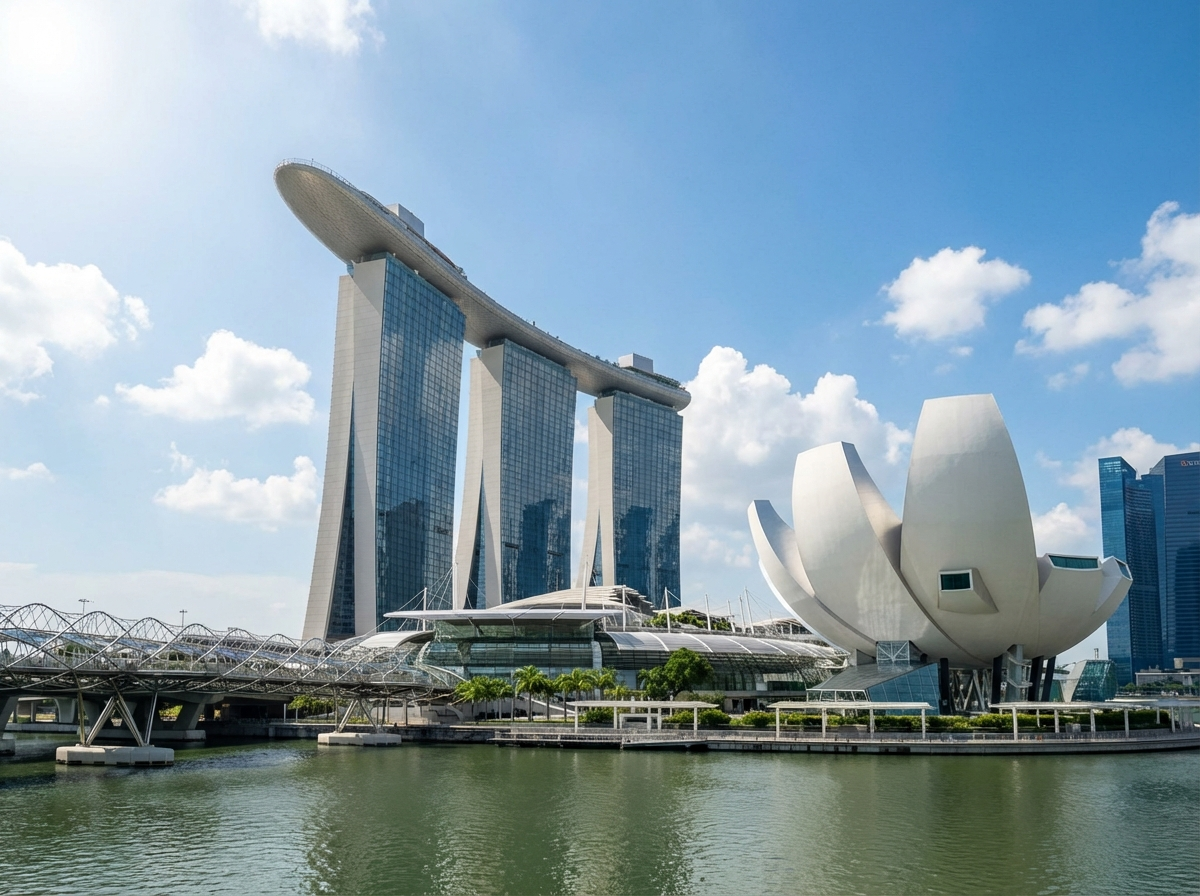

At first glance, Singapore feels like proof that modern society can be perfected.
Crime remains low by global city standards. Infrastructure works. Contracts are enforceable. Institutions function with unusual consistency. In 2025, Singapore recorded just under 20,000 physical crime cases, according to the Singapore Police Force’s Annual Crime Brief, a figure broadly stable year on year. For a dense city of nearly six million people, that stability is not accidental, it is engineered.
Singapore did not drift into order. It built it.
But when you engineer away chaos, you also engineer away margin for error. What makes the city secure can also make it feel suffocating, especially to those who fall slightly outside its calibration.
The Comfort of Law, The Weight of Law
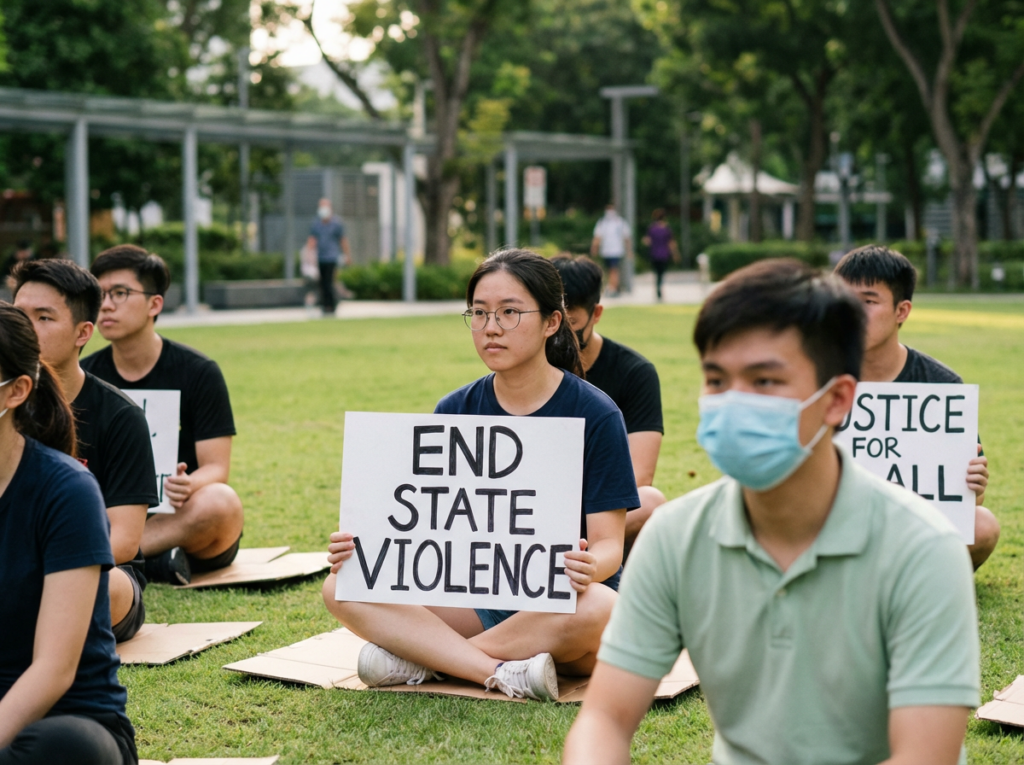
Singapore’s legal philosophy is deliberate and unapologetic. Rules are clearly defined, and enforcement is consistent.
Even minor infractions carry formal penalties. A first time littering offence can result in a fine of about S$300, roughly US$220 . At the far end of the spectrum, Singapore maintains some of the strictest drug trafficking laws in the world. Under its Misuse of Drugs Act, trafficking more than 15 grams of diamorphine can attract the death penalty, a policy that continues to be enforced and reaffirmed in official statements as recently as 2026.
This is not symbolic legislation. It is operational.
For families and businesses, that consistency creates trust. Contracts are upheld. Regulatory systems function. Investors know the rules will not shift overnight. Predictability lowers risk, and in a volatile region, that predictability is valuable.
Yet predictability also raises the cost of error. Compliance is assumed. Awareness is expected. There is limited room for improvisation once a line is crossed.
In many cities across Southeast Asia, enforcement can vary by context. In Singapore, the framework is the framework. For some, that clarity feels liberating. For others, it feels intense. Safety and scrutiny are built from the same structure.

Mobility, and the Price of Permission
Singapore’s public transport system is widely regarded as one of the most efficient in Asia, and official performance data supports that reputation. In 2025, the Land Transport Authority began publishing additional reliability indicators, including punctuality metrics. In one reported month, overall train punctuality exceeded 99 percent, meaning the overwhelming majority of services arrived within scheduled thresholds.
This makes car ownership unnecessary for daily life. But aspiration is different from necessity.
To understand car prices in Singapore, global readers need to understand one policy instrument, the Certificate of Entitlement, or COE. A COE is a government issued permit that grants the right to own and use a vehicle for ten years. The number of certificates released is strictly controlled to manage congestion and land scarcity, and they are allocated through competitive bidding.
In 2025 and early 2026, the cost of a COE for a small to mid sized car frequently hovered around S$100,000, approximately US$74,000. That figure covers only the permit. Once the vehicle price, registration fees, and taxes are added, a modest car can easily exceed S$160,000.
The policy logic is clear. Singapore is a dense island city with limited road space. Unrestricted car ownership would paralyse it.
But at a personal level, the effect is unmistakable. In one of Asia’s wealthiest cities, a basic car is priced like a luxury asset. Scarcity is not a side effect. It is policy.

The Paradox of Living Standards
Singapore regularly ranks among the world’s most expensive cities in global cost of living surveys, including the Economist Intelligence Unit’s Worldwide Cost of Living index. Housing attracts global headlines. Private healthcare and international schooling mirror other major financial hubs.
And yet, daily food tells a more layered story.
Hawker centres remain one of the city’s most powerful equalisers. In 2025 and 2026, a typical hawker meal such as chicken rice or noodles commonly ranges between S$4 and S$6, roughly USD$3 to USD$4.50, depending on location. In a city where property prices rival global capitals, this everyday affordability matters.
For comparison, the Big Mac Index, a widely cited purchasing power indicator, has placed a Big Mac at roughly US$5 in Singapore and around US$3 in Malaysia in recent years. On sticker price alone, Malaysia appears cheaper.
But affordability is not just about exchange rates, it is about income. Earnings in Malaysian ringgit are not equivalent to earnings in Singapore dollars. When measured against local wages, the gap narrows in lived experience.
Singapore is expensive at the macro level, yet daily routines are partially buffered. It is a city where global pricing coexists with local anchors.

Pressure Without Drama
The deeper suffocation is not the fine, the train timetable, or even the car permit. It is expectation.
Singapore runs on competence. Meritocracy is embedded in school admissions, scholarship systems, corporate hierarchies, and public service pathways. Performance is measured early and often. Comparisons are rarely loud, but they are persistent.
In faster growing, less structured cities across Southeast Asia, opportunity can feel chaotic but elastic. In Singapore, opportunity is abundant, yet tightly filtered. Falling behind can feel less like a temporary setback and more like misalignment with a system that does not easily slow down.
Singapore does not collapse into dysfunction. It does not drift unpredictably. It does not leave outcomes to chance.
That reliability is its triumph.
But when a society is engineered to function at a high level, the people inside it are expected to function at a high level too. The question is not whether Singapore is heaven or hell. It is whether perfection, once institutionalised, leaves enough room for imperfection.
Perhaps the real tension of Singapore is this, in removing chaos, it has also removed excuses.
Read about business spotlights and innovations features.