

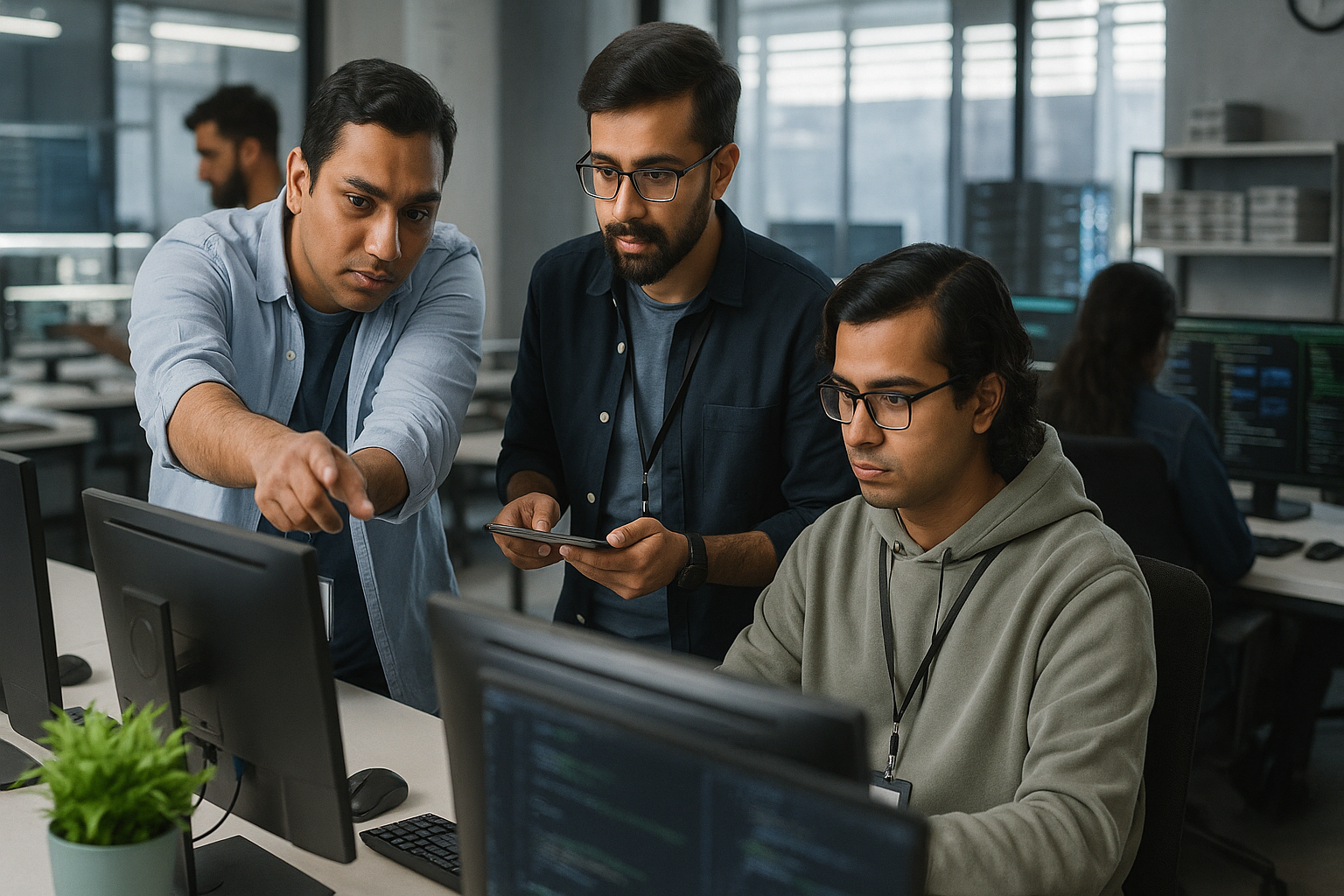
Investors back intelligence over infrastructure as India enters next tech phase
AI-native startups have officially taken the lead in India’s startup funding landscape. In the first half of 2025, these firms raised $454 million across 65 deals, surpassing SaaS companies, which brought in $432 million across 52 rounds. This marks a significant pivot: investors are now shifting their focus toward AI-first ventures, signaling a deeper transformation in the country’s innovation priorities.
India’s SaaS era makes room for intelligence-first growth
India has long been recognized as a global SaaS hub. Companies like Zoho, Freshworks, and Postman built powerful recurring-revenue models and scaled worldwide. But in 2025, momentum is shifting.
New data from Tracxn shows that AI-native firms have overtaken SaaS companies in both capital raised and deal volume. Unlike earlier AI users who bolted tools onto existing workflows, these startups are building from scratch on large language models (LLMs) and generative AI stacks.
Firms like Sarvam AI, Vodex, and Neysa are not merely using AI—they are engineered around it. Their platforms serve sectors like healthcare, customer support, and enterprise automation with tools rooted in AI from day one.
Investors see long-term value in AI-first foundations
The funding shift reflects a growing investor belief: proprietary models, localized data, and AI co-pilots offer better long-term defensibility than standard SaaS features. This belief is reshaping investment theses across the board.
Early-stage funds like Pi Ventures and Speciale Invest have increased bets on deep tech. At the growth stage, larger firms like Lightspeed and Peak XV are building vertical AI portfolios. This mirrors global trends, where AI-native companies are now outperforming SaaS in funding cycles.
India’s advantage? It’s not just a fast-growing market—it’s a builder base for emerging economies, especially in Asia and Africa. With multilingual user data and low-cost compute innovation, Indian AI startups are tackling global problems from a regional foundation.
India’s AI-native rise is ecosystem-driven
This isn’t a temporary spike—it’s structural. India’s AI-native ecosystem thrives because of several key ingredients:
A robust pipeline of engineers and data scientists trained in generative AI
Government-backed programs like the IndiaAI Mission fueling model development
A huge, linguistically diverse user base demanding custom-built AI
Indian startups are innovating beyond English-dominant models. They’re creating hyper-local NLP tools, experimenting with low-resource LLMs, and applying federated learning to privacy-sensitive sectors like fintech and healthtech.
While SaaS continues to grow, many platforms are becoming generic and undifferentiated. By contrast, AI-native firms are laying down new infrastructure. Investors see them not just as product companies, but as platforms for future digital economies.
Unicorns, scale, and exportable intelligence
India is entering a new phase in its tech journey. Expect the country’s first AI-native unicorn to emerge within the next 12 to 18 months. With GPU clusters, public data sandboxes, and dedicated policy support now accessible, the barriers to scale are falling fast.
New ventures are already targeting verticals like legal tech, logistics, and education. These sectors benefit from AI’s ability to personalize, automate, and translate across languages and user types. For investors and founders alike, AI is no longer an enhancement—it’s the core engine of value.
AI-native startups signal India’s new innovation era
India surpassing SaaS with AI-native startup funding is more than a metric—it marks a foundational shift in how the country builds and funds its technology future. This isn’t just a change in capital flow. It’s a broader move from repeatable software to intelligent systems, deeply rooted in local needs and global potential.
With talent, infrastructure, and policy all aligned, India is no longer just participating in the global AI race. It’s helping shape the rulebook.