


AI-driven innovation takes center stage in Singapore
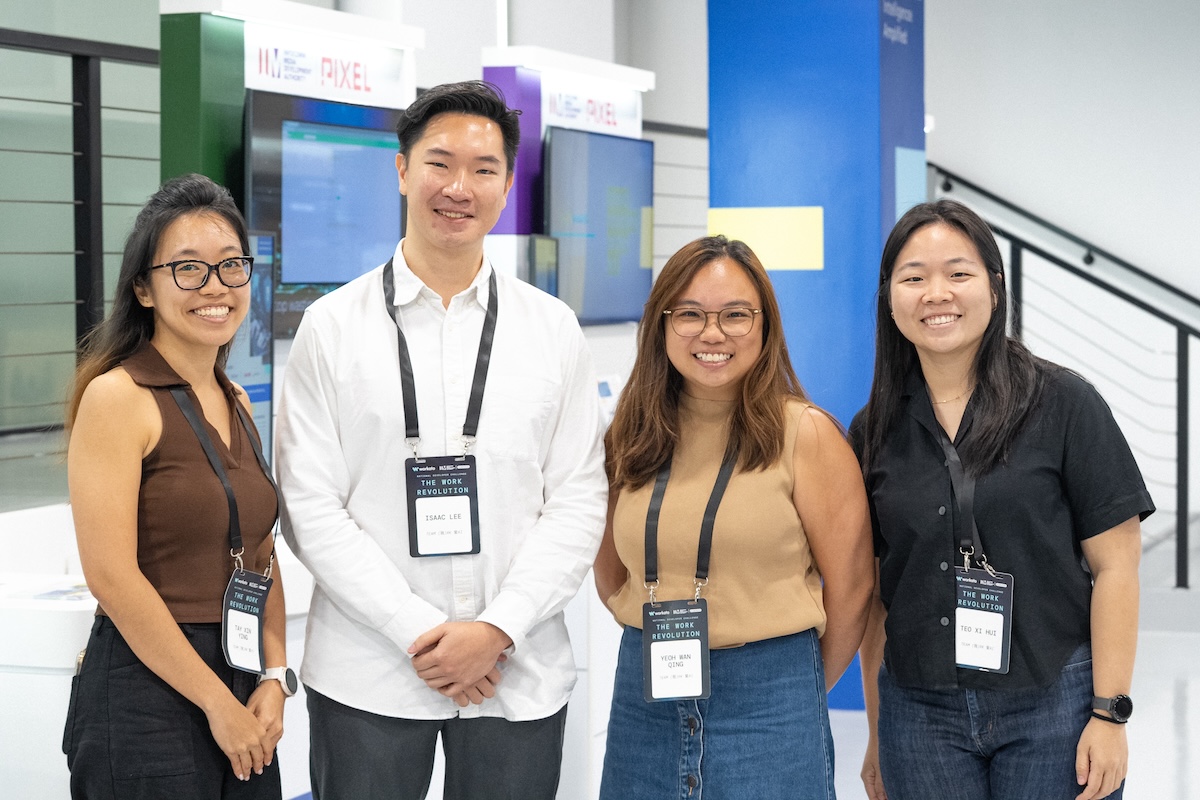
Singapore’s national developer competition, the Work Revolution Dev Challenge, has announced its 2025 winners, spotlighting a new wave of AI-driven workplace solutions. This year’s winning entries—from no-code automation to smart productivity tools—highlight how local developers are solving real problems with creative, practical technologies. These solutions not only streamline workflows but also reflect Singapore’s vision of a digitally empowered workforce.
The challenge reinforces the country’s ambition to lead in regional AI innovation and proves that grassroots tech can be just as impactful as enterprise R&D.
Building a smarter future through local developer talent
Launched in 2022 by IMDA and SGTech, the Work Revolution Dev Challenge is part of a national push to accelerate workplace transformation. It brings together developers, product engineers, and startup teams who are eager to tackle inefficiencies with AI and digital tools. The event supports Singapore’s Digital Economy Framework for Action, which promotes inclusive growth, industry-academia collaboration, and continuous tech upskilling.
This year, more than 350 submissions were evaluated based on scalability, technical strength, and societal impact. With themes like automation, AI augmentation, and legacy system modernization, the competition helps shape a future-ready tech workforce.
Highlights from the winning innovations
The 2025 winners represent a strong focus on applied AI with real-world benefits:
AutoFlow (Grand Winner): Created by a GovTech Singapore team, AutoFlow is a no-code AI tool designed for government staff. It enables natural language inputs to automate reports, schedules, and data tasks—no coding required. The judges highlighted its simplicity and its potential to free up time across public agencies.
CodeBridge (Runner-Up): This tool, built by a group of freelance developers, uses generative AI to refactor old codebases. It translates legacy Java or .NET systems into modern frameworks, blending machine-generated code with human validation.
SynthTime (Special Mention – Sustainability Category): SynthTime tracks productivity in hybrid teams while also monitoring energy usage. Its insights help organizations plan more sustainably—earning praise from climate-focused tech advocates.
Winners received cash prizes, access to cloud credits from AWS and Google Cloud, and mentorship from firms like Accenture, SAP Labs Asia, and AI Singapore.
Singapore’s strategic bet on developer-led AI
Singapore’s innovation strategy is unique in how it empowers everyday developers. Rather than focusing only on deep-tech labs or unicorn startups, the country supports tech builders who are solving problems in coworking spaces, bootcamps, and community accelerators.
Through programs like TeSA (TechSkills Accelerator) and the Digital Leaders Programme, the government helps upskill talent in AI design, automation, and platform engineering. These programs complement grassroots contests by offering long-term support for career growth.
This bottom-up approach shows that impactful AI doesn’t always start with massive funding or elite institutions. Sometimes, the best ideas begin on a developer’s laptop.
From prototypes to public sector pilots
Following the competition, IMDA confirmed that several winning projects will enter pilot trials through the Smart Nation initiative. These projects will be tested in public administration, education, and SME transformation—allowing developers to fine-tune their products in real-world environments.
Furthermore, Singapore is exploring partnerships with Japan, South Korea, and Australia to co-host similar developer-led AI challenges. These efforts are part of a larger plan to build a regional innovation network under the ASEAN-AI collaboration framework.
Organizers have also announced that the 2026 challenge will include new categories, including AI for accessibility, blockchain developer tools, and LLM safety frameworks. This expansion ensures that the competition remains relevant as AI use cases continue to diversify.
As this year’s winners refine their tools and enter the market, their success could inspire more developers to take on real-world problems—with real impact.
Singapore’s developer-led AI future
The 2025 Work Revolution Dev Challenge winners prove that transformative ideas often come from the ground up. By spotlighting developer-led solutions, Singapore is advancing a model where national innovation is driven by people closest to the problems—not just by big tech.
As these solutions scale and enter public systems or commercial markets, they will shape how businesses and governments adopt AI. In a world racing to integrate intelligent tools, Singapore’s investment in local talent may be its most valuable long-term asset.