


Global momentum affirms South Korea as Asia’s rising innovation hub
In a major boost to its innovation profile, South Korea’s K-Startup Grand Challenge (KSGC) has drawn a record-breaking 2,626 applications from 133 countries in 2025. The surge—up 50% from 2024—underscores South Korea’s rise as a preferred destination for global startups seeking to enter Asian markets. The numbers also reflect broader global interest in Korea’s structured accelerator programs and expanding tech ecosystem.
A decade of startup diplomacy in action
First launched in 2016 by South Korea’s Ministry of SMEs and Startups, in collaboration with the National IT Industry Promotion Agency (NIPA), the K-Startup Grand Challenge was designed to attract promising non-Korean startups. Over the past decade, it has quietly built a reputation as one of Asia’s most effective public-private startup accelerators.
The program offers more than funding—it creates a full-stack soft landing in Korea. Participants receive equity-free grants, free office space at Pangyo Techno Valley (Korea’s version of Silicon Valley), and mentorship from leading Korean corporates. The initiative has supported over 300 startups to date, with several alumni securing high-profile commercial deals and investment rounds.
Unlike many global accelerators that focus on short-term demo events, KSGC has a long-view model. It connects founders to industry stakeholders, regulators, and enterprise customers, fostering integration into Korea’s broader innovation fabric.
Bigger benefits, deeper tech, wider reach
For its 10th anniversary edition, KSGC has raised the stakes. This year’s program includes:
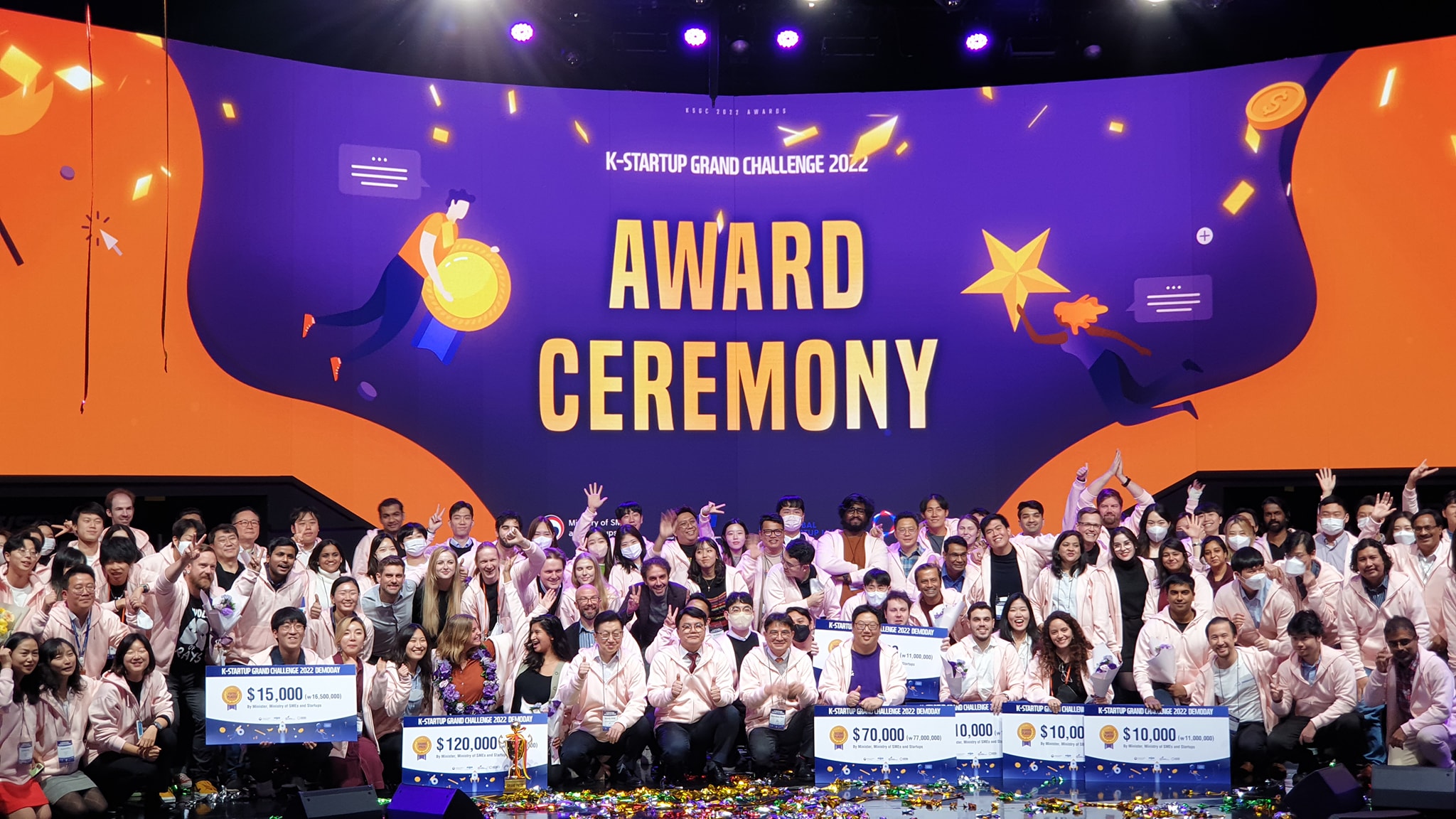
Up to $120,000 in equity-free grants
Tailored acceleration programs in AI, robotics, green energy, and healthtech
Business matchmaking sessions with Korean investors and large enterprises
A fully sponsored 3-month incubation period in Korea for the top 60 teams
One major shift is the increased focus on deeptech verticals. By spotlighting AI, robotics, and digital health, KSGC aligns closely with Korea’s national R&D priorities and future industrial policies. According to NIPA, this year’s applications showed sharp growth from countries such as India, Indonesia, Germany, and the U.S., indicating the program’s global appeal and relevance.
Following the acceleration phase, startups will compete in Demo Day, pitching to an audience of VCs, government officials, and corporate leaders. Finalists often secure long-term partnerships or follow-on grants to continue operations within Korea.
Why Korea is winning global startup attention
South Korea’s appeal to global entrepreneurs is rooted in intentional policy-making and world-class digital infrastructure. While many innovation hubs around the world are scaling back their support due to economic pressures, Korea is doubling down. The government continues to invest in cross-border startup programs, modernize regulation, and expand access to public R&D platforms.
Equally important is the country’s tech-forward consumer base. Korea boasts some of the world’s highest internet penetration, fastest 5G adoption, and a culture that eagerly adopts smart technologies. For startups in sectors like mobility, fintech, biotech, or AI, the Korean market offers not only scale but real-time feedback loops and access to early adopters.
Another reason KSGC stands out is its partnership model. Unlike accelerators that offer short-term funding in exchange for equity, KSGC positions itself as a platform for soft-market entry. It offers office space, mentoring, and government support—without requiring a slice of the company in return.
Notably, past alumni like bluFalcon (Singapore), Kata.ai (Indonesia), and LymphaTouch (Germany) have successfully entered the Korean market and maintained commercial traction. This proves KSGC’s ability to deliver not just exposure, but embedded outcomes.
Korea’s innovation model gains momentum
As global interest in Asia’s tech sector continues to rise, Korea is redefining its role from a fast follower to a proactive innovation leader. The record-breaking 2025 applicant pool suggests that South Korea is no longer just a manufacturing powerhouse—but a serious magnet for early-stage global talent.
Looking ahead, KSGC is well-positioned to become Asia’s equivalent of Y Combinator. While it may not yet rival Silicon Valley in scale, its integration into national economic development strategies makes it a unique force in the region. Korea’s ability to blend startup acceleration with industrial policy, talent development, and public-sector engagement gives it an edge that few ecosystems can match.
The success of KSGC also comes at a time when startups are seeking alternatives to China due to shifting regulatory risks and geopolitical dynamics. Korea offers a stable, innovation-friendly environment with access to both Northeast Asia and Southeast Asia—making it an ideal hub for cross-border growth.
K-Startup Grand Challenge is Korea’s global calling card
The record turnout for KSGC 2025 shows that South Korea’s long-term innovation strategy is bearing fruit. By creating a bridge between global founders and local opportunities, the program is doing more than just running an accelerator—it is shaping Korea’s next-generation economy.
Through its focus on deeptech, regional integration, and collaborative growth, KSGC demonstrates how a government-backed program can become a centerpiece of national innovation. As the selected startups arrive in Korea later this year, they won’t just be participating in a program—they’ll be joining a movement.