

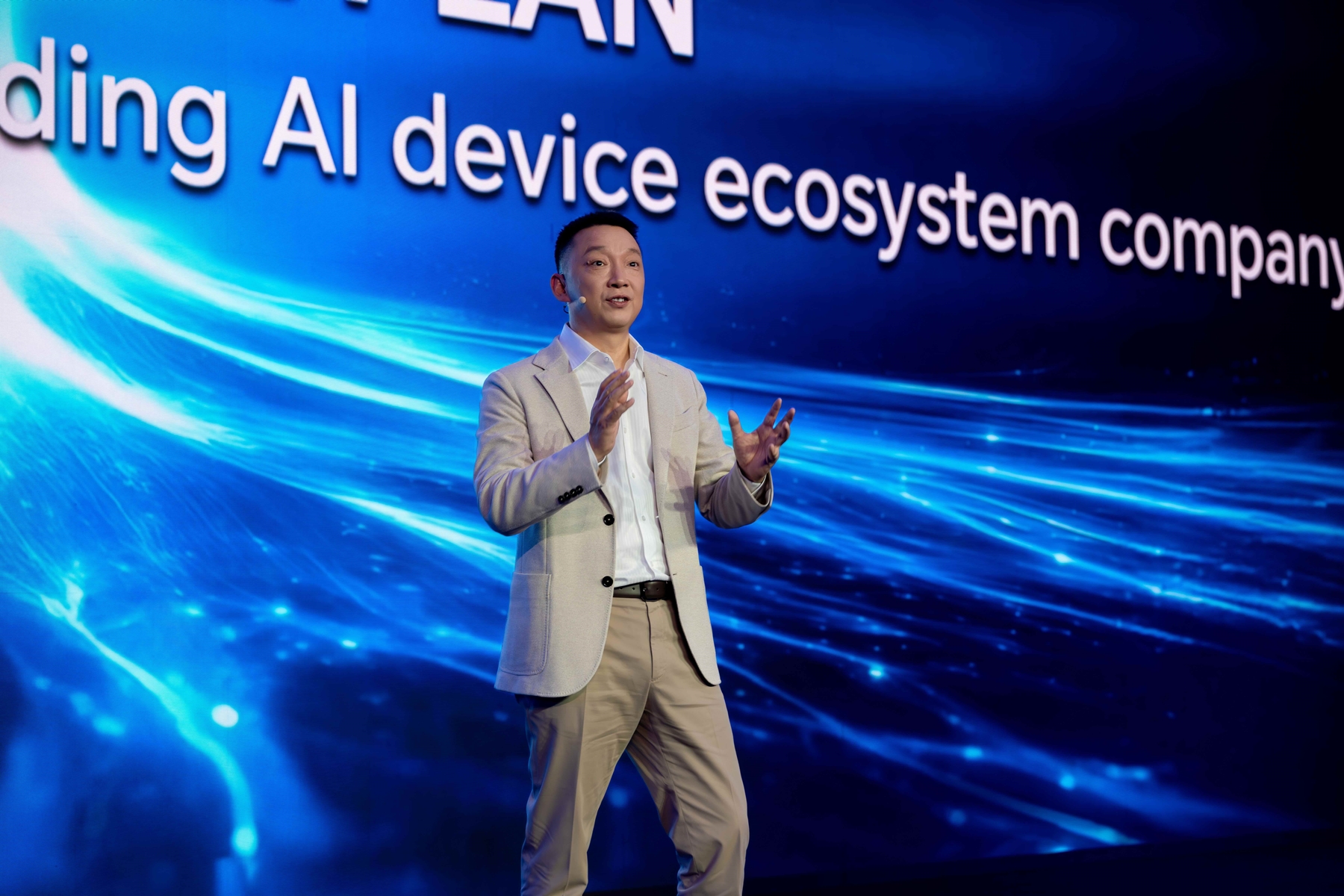




China’s tech champion outlines AI future
At its Shanghai Connect 2025 conference, Huawei Technologies unveiled a bold compute and chip roadmap designed to rival U.S. semiconductor leaders such as Nvidia. Central to this plan are Huawei’s Ascend AI chips, Kunpeng server processors, and new high-bandwidth memory technology, all positioned to deliver annual performance improvements. The roadmap also introduced the concept of “supernodes”, enabling large-scale AI model training and cloud deployment. Beyond technical milestones, the strategy underscores Huawei’s push for self-sufficiency in compute power amid continuing U.S. export restrictions and geopolitical pressures.
Navigating sanctions and supply chain barriers
Huawei has faced escalating U.S. restrictions since 2019, cutting off access to advanced semiconductors, design software, and chipmaking tools. These sanctions forced the company to rethink its hardware strategy, accelerating domestic innovation and partnerships across China’s semiconductor ecosystem.
Despite these obstacles, Huawei has leveraged its HiSilicon design unit and collaborations with local foundries to produce increasingly competitive chips. The launch of the Ascend 910B AI processor in 2023 marked a turning point, demonstrating that Huawei could deliver AI compute performance closer to Nvidia’s A100 despite limitations in manufacturing processes.
The company has also benefited from strong domestic demand. China’s AI boom, fueled by large language models, smart city deployments, and enterprise automation, has created an urgent need for high-performance chips not reliant on foreign supply chains. Huawei’s roadmap is both a response to these domestic needs and a signal of ambition on the global stage.
Ascend, Kunpeng, and supernodes
Huawei’s newly announced roadmap emphasizes a deep hardware stack that integrates compute, memory, and networking.
Ascend AI chips – Huawei committed to annual upgrades of its AI accelerator line, improving energy efficiency and performance per watt. These chips will support large-scale training for generative AI models, positioning Ascend as a competitor to Nvidia’s GPU dominance.
Kunpeng processors – The server-focused Kunpeng CPUs, based on ARM architecture, are set for enhanced compatibility with Huawei’s cloud and enterprise solutions. This reflects a strategy of vertical integration, enabling Huawei to build entire compute environments independent of foreign suppliers.
Supernodes – A highlight of the roadmap is the introduction of “supernodes”: interconnected clusters of Ascend chips designed to rival Nvidia’s DGX systems. These supernodes will allow Chinese enterprises and research institutes to scale AI training without relying on imported GPUs.
High-bandwidth memory (HBM) – Huawei is also developing its own HBM technology, a critical component for AI compute performance. Controlling both compute and memory ecosystems ensures greater resilience against external sanctions.
Software integration – Alongside hardware, Huawei is expanding its CANN AI framework and MindSpore deep-learning platform, ensuring developers have optimized software stacks to harness the full power of Ascend and Kunpeng chips.
Together, these initiatives represent a comprehensive compute ecosystem, spanning from silicon to servers to cloud platforms.
A strategic challenge to Nvidia
Huawei’s roadmap reflects more than technological ambition—it is a strategic assertion of independence. By pursuing a full-stack approach, Huawei is directly challenging Nvidia’s dominance in AI computing, where U.S. firms have long held a decisive lead.
For China, Huawei’s efforts are also symbolic. Semiconductors are the linchpin of digital sovereignty, and progress in this area reduces reliance on vulnerable supply chains. By showcasing credible alternatives to Nvidia’s GPUs, Huawei strengthens Beijing’s narrative that China can thrive despite Western restrictions.
Yet challenges remain. Manufacturing constraints mean Huawei’s chips may lag behind Nvidia’s most advanced GPUs in absolute performance. Furthermore, scaling HBM production will require breakthroughs in packaging and supply chains where China still trails. Global customers outside China may also hesitate to adopt Huawei chips given geopolitical risks and ecosystem fragmentation.
Nevertheless, Huawei’s strategy of annual upgrades, ecosystem integration, and domestic demand alignment positions it as a formidable regional force. Even if Huawei cannot immediately surpass Nvidia, it could reshape Asia’s compute landscape by offering viable alternatives at scale.
Asia’s chip ecosystem in transition
Huawei’s roadmap will have significant implications for Asia’s broader chip and compute ecosystem.
First, it provides a blueprint for other Asian firms seeking resilience under geopolitical stress. Countries like South Korea, Taiwan, and India are also exploring deeper integration of compute infrastructure, and Huawei’s supernode model could influence regional R&D strategies.
Second, Huawei’s focus on vertical integration may inspire new partnerships within Asia, from memory suppliers in South Korea to software startups across Southeast Asia. By tying together hardware and application layers, Huawei could create a gravitational pull around its ecosystem.
Third, the roadmap intensifies the U.S.–China tech rivalry, with Asia caught between competing standards and supply chains. Regional governments will likely face tougher choices on aligning with U.S. or Chinese compute ecosystems, especially as Huawei chips gain traction in domestic markets.
Finally, Huawei’s push for self-sufficiency reinforces Asia’s role as a driver of innovation in semiconductors, not merely a manufacturing hub. By pioneering its own compute architectures, Asia is asserting its place in the global race for AI leadership.
Self-sufficiency meets global ambition
Huawei’s ambitious compute and chip roadmap signals a new era in Asia’s semiconductor story. Through its Ascend AI accelerators, Kunpeng processors, supernodes, and high-bandwidth memory, the company is positioning itself as a credible challenger to Nvidia while reducing reliance on foreign supply chains.
For China, this is both a technological and geopolitical milestone. For Asia, it demonstrates the region’s capacity to innovate at the heart of the global compute race.
As Huawei delivers on its roadmap, the outcome will not only shape the company’s future but also influence how Asia defines its digital sovereignty and place in the world’s technology hierarchy.